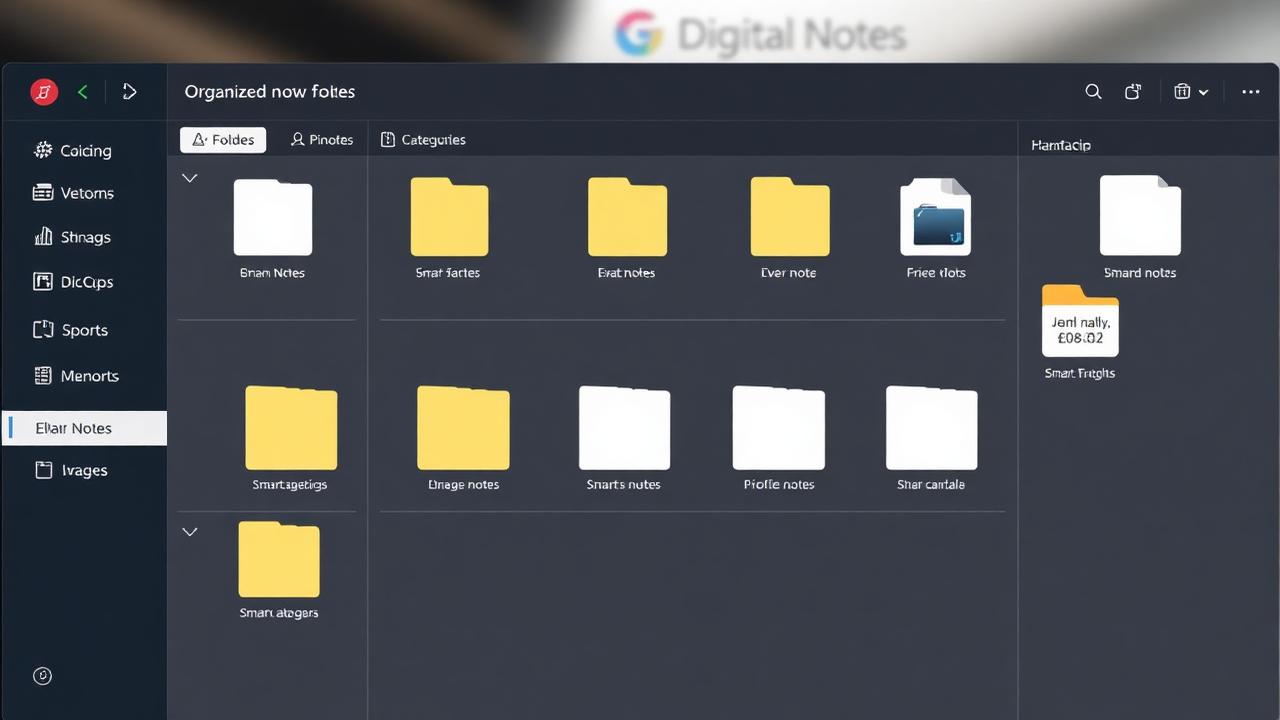
Struggling with scattered notes? You're not alone. The average knowledge worker creates over 200 notes per month, yet 65% report difficulty finding information when needed.
Poor note organization leads to lost productivity (2.5 hours per week searching), missed opportunities (important ideas buried), and mental clutter from disorganization.
Here are 7 proven organization methods:
-
THE PARA METHOD - Best for professionals managing multiple projects. Divide notes into Projects (active work), Areas (responsibilities), Resources (reference), and Archives (completed).
-
CATEGORY-BASED - Best for visual thinkers. Create broad categories: Work, Learning, Ideas, Personal. Simple and intuitive.
-
TAG-FIRST SYSTEM - Best for creative thinkers. Use flexible tags instead of rigid folders. One note can live in multiple contexts.
-
DATE-BASED - Best for journalists and students. Organize chronologically by year, month, and week.
-
TOPIC CLUSTERS - Best for researchers. Group related notes into topic clusters that mirror natural knowledge structure.
-
HYBRID APPROACH - Best for most people! Combine folders for major categories, tags for cross-referencing, and pin important notes.
-
SMART FOLDERS & AI - Best for power users. Use AI to auto-categorize, suggest tags, and archive old notes automatically.
Implementation Tips: Start simple with 3-5 categories, review weekly (10 minutes every Friday), use search effectively, and delete ruthlessly (archive notes not accessed in 6 months).
Common mistakes to avoid: Over-organizing with 50 folders, inconsistent naming, no review system, and ignoring search functionality.
Modern apps like Luma offer visual folder trees, powerful tagging, AI-powered categorization, full-text search, and smart filters.
Your action plan: This week choose one method, this month organize existing notes, and maintain 10-minute weekly reviews.
The best organization system is one you'll actually use. Start simple, iterate based on needs, and leverage AI tools to automate the heavy lifting.
Luma Editorial Team
• EditorialLuma's editorial team researches and writes these guides based on publicly available information, hands-on use of Luma and other apps, and reader feedback. Articles are reviewed and updated periodically to keep pricing and features accurate.
Ready to Apply These Tips?
Luma turns the notes you write into a summary and flashcards. The free plan is permanent — no card needed.
Related Articles
How to Organize Study Notes Like a Straight-A Student (AI Method)
The exact system straight-A students use to organize notes for maximum retention and exam success. Includes templates, AI automation, and proven techniques.
Best ADHD Planning App in 2026: 7 Planners Compared
Which planner app actually works with an ADHD brain? We compare 7 ADHD planning apps on visibility, capture speed and setup cost — plus a 15-minute setup that sticks.
AI Note-Taking vs Traditional Notes: Which is Better?
Comprehensive comparison of AI-powered note-taking vs traditional digital notes. See pros, cons, and which method is right for you.
Atomic Habits for Note-Takers: Apply James Clear's Methods
Transform your note-taking using Atomic Habits principles. Learn habit stacking, the 2-minute rule, environment design, and identity-based note-taking.