
Most people take notes wrong. They transcribe instead of process, never review what they write, and wonder why nothing sticks. Science shows how to do it better.
The Science of Note-Taking
Your brain doesn't record information like a camera. It constructs knowledge through active processing. The Encoding-Storage-Retrieval Model shows: Notes must be encoded (processed during capture), stored (organized for access), and retrieved (reviewed and applied).
Research findings: Handwriting beats typing for retention (motor memory + slower pace = deeper processing), active note-taking outperforms passive copying by 300%, review within 24 hours crucial (forgetting curve shows 50% loss in one day), and teaching others best retention method (90% vs 10% from lecture).
10 Science-Backed Note-Taking Strategies
1. Active Processing Over Transcription
Don't copy verbatim. Process and rephrase. Listen/read, pause to understand, write in your own words, connect to existing knowledge.
Science: Forces deeper cognitive processing. Creates stronger neural pathways. Results: 2-3x better retention.
2. Use the Feynman Technique
Take notes as if teaching a 12-year-old. Use simple language, explain concepts, identify gaps, fill knowledge holes.
Science: Exposes understanding gaps. Simplification requires deep knowledge. Results: Identifies what you don't know.
3. Implement Active Recall
Don't just reread notes - quiz yourself. Cover notes and recall from memory, write what you remember, check accuracy, focus on mistakes.
Science: Retrieval strengthens memory more than review. Testing effect is proven by decades of research. Results: 50% better long-term retention.
4. Apply Spaced Repetition
Review notes on schedule: Day 1 (right after), Day 3, Week 1, Month 1, Month 3.
Science: Optimal intervals combat forgetting curve. Each retrieval strengthens memory. Results: Information moves to long-term memory.
5. Connect New to Old (Elaborative Rehearsal)
Link new information to what you know. How does this relate to X? What examples can I think of? What's the opposite?
Science: Memory is network of connections. More connections = stronger retention. Results: 3x easier recall.
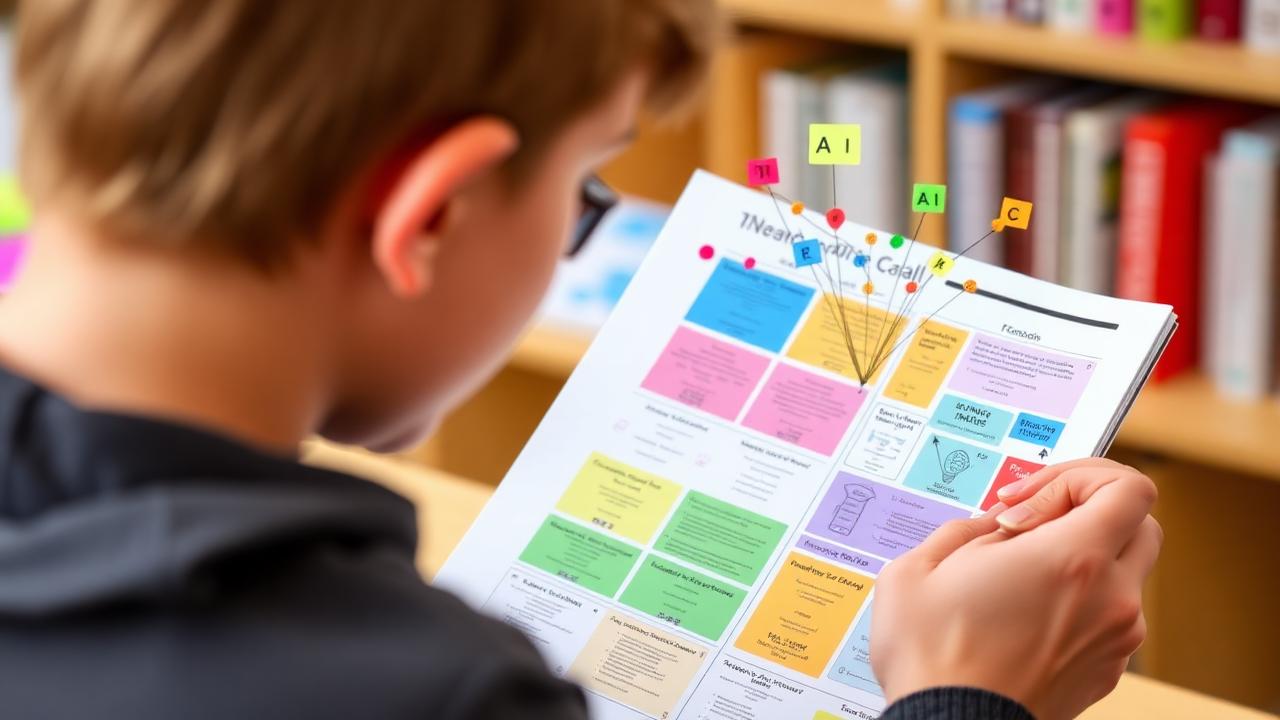
6. Use Visual Encoding
Add diagrams, mind maps, flowcharts, color coding, symbols, and drawings.
Science: Dual coding theory - visual + verbal stronger than verbal alone. Results: 40% better comprehension.
7. Generate Examples
Create your own examples beyond what's given. Real-world applications, hypothetical scenarios, personal connections.
Science: Generation effect - self-created examples stick better. Results: Practical understanding.
8. Ask Questions in Margins
Write questions alongside notes. What if? Why does this work? How could this fail? What's the application?
Science: Questions prime brain for deeper processing. Creates active learning. Results: Critical thinking development.
9. Summarize in Your Own Words
End each note session with summary. Key points (3-5 bullets), main takeaway, how this applies, what to explore further.
Science: Synthesis requires understanding. Forces information compression. Results: Big picture retention.
10. Teach Someone (Even Imaginary)
Explain your notes to someone. Use analogies, answer questions, simplify complex ideas.
Science: Teaching is ultimate test of understanding. Identifies weak areas. Results: 90% retention rate.
The Optimal Note-Taking Workflow
Before: Preview material, identify key questions, activate prior knowledge (5 min).
During: Active processing (not transcribing), use abbreviations, mark unclear points, draw connections (focus on understanding).
Within 24 Hours: Review and enhance notes, fill gaps, add examples, create summary, generate questions (15-20 min).
Week 1: Active recall test, quiz yourself, identify weak areas, review mistakes (10 min).
Month 1: Spaced repetition review, teach concept to someone, update with new connections (10 min).
Common Note-Taking Mistakes
-
Transcription Trap - Writing everything word-for-word. Fix: Paraphrase in your own words.
-
Never Reviewing - Taking notes then forgetting them. Fix: Schedule review sessions.
-
Highlighting Overload - Highlighting everything. Fix: Highlight max 3 key points per page.
-
Passive Reading - Copying from textbook without thinking. Fix: Close book and write from memory.
-
No Organization - Random notes everywhere. Fix: Consistent structure and digital organization.
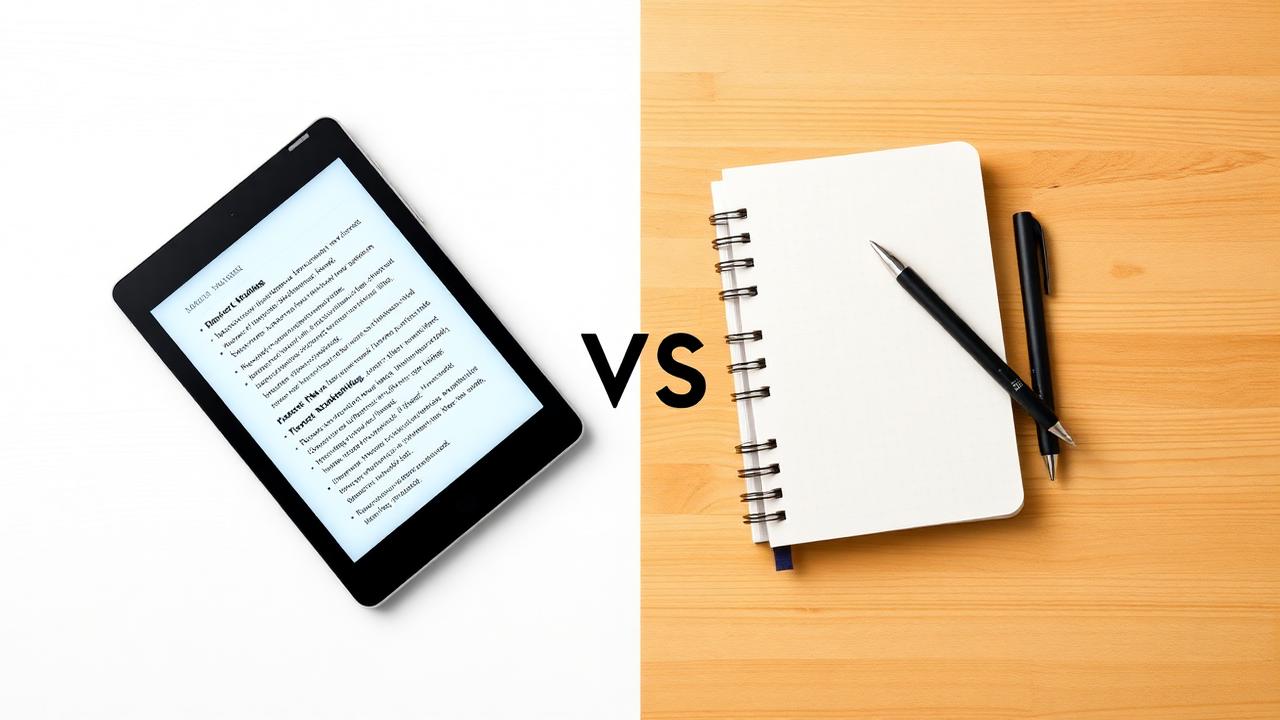
Digital vs Handwritten: What Science Says
Handwritten Advantages: Better retention (motor memory), deeper processing (slower pace), fewer distractions, better for diagrams.
Digital Advantages: Easy organization, searchable, multimedia integration, AI assistance, backup and sync.
Best Approach: Hybrid method - handwrite during learning (better encoding), digitize and enhance later (better storage/retrieval), use AI for organization and review.
AI-Enhanced Note-Taking
Modern AI can help: Auto-generate summaries (saves review time), suggest connections (finds patterns you miss), create quiz questions (active recall automation), schedule reviews (spaced repetition automation).
Important: AI assists but doesn't replace thinking. Use AI for organization and review automation. Still do manual processing during initial capture.
The 30-Day Note-Taking Challenge
Week 1: Choose one method (Cornell or Active Processing), take notes in your own words, review within 24 hours.
Week 2: Add visual elements (diagrams, mind maps), generate your own examples, teach concept to someone.
Week 3: Implement active recall (quiz yourself), use spaced repetition schedule, track what you remember.
Week 4: Add AI assistance (auto-summaries, organization), refine your system, measure improvement.
Expected Results: 50% better retention, 3x faster review, deeper understanding, less study stress.
Tools That Support Better Note-Taking
Luma offers: Active recall templates, spaced repetition reminders, AI summarization, quiz generation, visual organization, mobile capture, voice-to-text.
Remember: The tool doesn't make you smart - your process does. Best note-taking is active processing, regular review, teaching others, and connection building.
Start today: Take your next note using one technique from this guide. Build the habit of better note-taking, one note at a time.
Luma Editorial Team
• EditorialLuma's editorial team researches and writes these guides based on publicly available information, hands-on use of Luma and other apps, and reader feedback. Articles are reviewed and updated periodically to keep pricing and features accurate.
Ready to Apply These Tips?
Luma turns the notes you write into a summary and flashcards. The free plan is permanent — no card needed.
Related Articles
Digital Notes vs Paper Notes: The Science-Based Verdict
Should you take notes on paper or digitally? We analyze 15+ research studies on memory, retention, and learning to give you a definitive answer.
Digital Note-Taking vs Paper: Which is Better in 2025?
Comprehensive comparison of digital and paper note-taking. Science-backed analysis of retention, organization, and productivity to help you choose the best method.
Study Notes That Actually Help You Remember (Science-Backed)
Create study notes that maximize retention and recall. Learn active recall, spaced repetition, elaborative interrogation, and other cognitive science techniques.
Cornell Notes Method in 2026: Templates, Examples & Digital Apps
Learn the Cornell note-taking method with printable templates, real examples, and the best digital apps for Cornell notes on laptop or iPad in 2026.